Is Now a Good Time to Invest in Copper? Experts Tout Bullish Fundamentals

Washington Eyes Brazil’s Rare Earths in Early Trade Talks
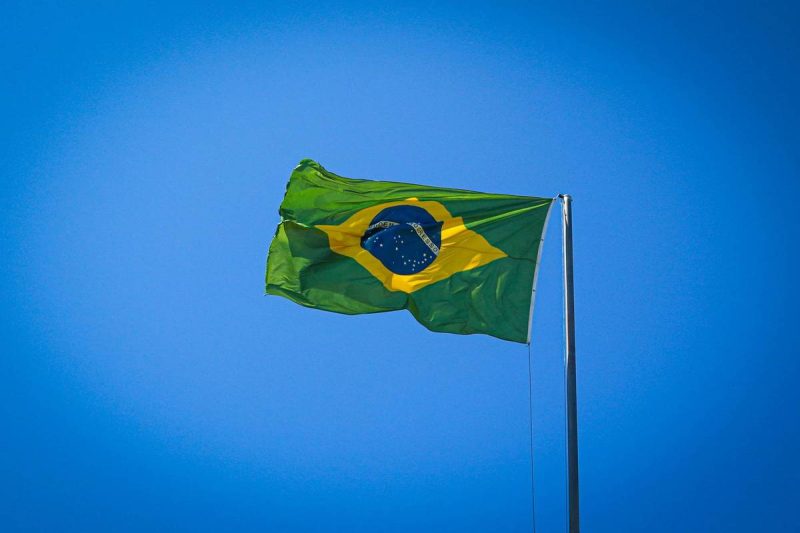

Brazil’s vast but underdeveloped rare earth resources are emerging as a focal point in renewed talks with the US, as both governments explore ways to bolster ex-China supply chains.
Washington has been quietly sounding out Brasília on a potential rare earths partnership following a tentative diplomatic thaw between President Donald Trump and Brazilian President Luiz Inácio Lula da Silva, According to a Financial Times report.
Brazil holds the world’s second-largest reserves of rare earth elements, according to the US Geological Survey (USGS), yet produces only a fraction of global supply and has limited processing capacity.
Currently, China controls about 60 percent of global rare earth mining and more than 90 percent of processing, a dominance that has come into sharper focus after Beijing imposed export restrictions in response to Trump’s trade tariffs.
Since then, the US has accelerated efforts to secure alternative sources, striking critical mineral agreements with countries including Australia and the Democratic Republic of Congo.
“There’s nothing but opportunity here,” one official familiar with the discussions told the Financial Times. “Brazil’s government is open to a deal on critical minerals.”
Talks remain at an early stage, but engagement has intensified over the past year.
Gabriel Escobar, the US chargé d’affaires in Brazil, has discussed rare earths with Brazil’s mining association Ibram and companies active in the sector, according to people with knowledge of the meetings.
Officials from the US Department of Commerce and Brazil’s trade ministry have also held preliminary discussions on critical minerals cooperation.
Momentum has also been reinforced by growing competition for Brazil’s attention. In Rio de Janeiro last week, European Commission President Ursula von der Leyen said the EU was in talks with Brazil on a critical raw materials agreement covering lithium, nickel and rare earths, framing the issue as central to strategic autonomy.
Despite the country’s abundance of the resource, Brazil’s rare earth ambitions are constrained by familiar hurdles. Projects have struggled with financing, regulatory delays and a lack of geological mapping.
For instance, Serra Verde, Brazil’s only operating rare earth mine, took 15 years to reach production. The mine received a US$465 million loan from the US International Development Finance Corporation in August last year.
Political risk consultants see conditions aligning for a future agreement. Christopher Garman of Eurasia Group said he expects progress soon. “We’ve got like a 75 percent odds of some kind of a deal occurring by Q1,” he said.
Brazilian policymakers see rare earths as both an economic opportunity and a diplomatic lever. The country has been seeking to rebalance relations with Washington after tensions flared last year over US trade tariffs and sanctions linked to the prosecution of former president Jair Bolsonaro.
Since then, the US has rolled back some measures, including tariffs on Brazilian food products, and reopened broader trade talks.
Commercial interest is already building around this policy shift. Australian-listed developer Viridis Mining and Minerals (ASX:VMM) is in talks with potential rare earth buyers in the US and Europe for material from its proposed Colossus project in Minas Gerais, as noted in a Bloomberg report.
Klaus Petersen, Viridis’s Brazil country manager, said the company aims to sign multiple offtake agreements as Western customers look to diversify away from China.
Still, potential friction points remain, including Brazil’s condemnation of recent US actions in Venezuela. While analysts say those tensions could slow negotiations, they are unlikely to derail them entirely given the strategic importance of minerals.
Securities Disclosure: I, Giann Liguid, hold no direct investment interest in any company mentioned in this article.
This post appeared first on investingnews.com