Iran warns European countries will be ‘legitimate targets’ if they join conflict

Trump admin warns Peru it could lose sovereignty as China tightens grip on nation
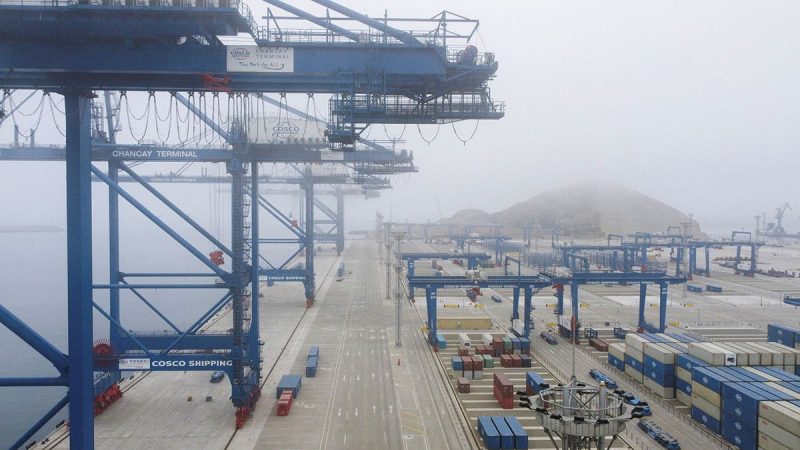
The United States is warning Peru that China’s growing control over a major Pacific port could threaten the country’s sovereignty, escalating tensions over Beijing’s expanding footprint in Latin America.
The concern centers on the $1.3 billion deep-water port in Chancay, north of Lima, which has become a flashpoint between Washington and Beijing after a Peruvian court ruling limited government regulatory oversight of the project.
The State Department’s Bureau of Western Hemisphere Affairs said on social media that it was ‘concerned about latest reports that Peru could be powerless to oversee Chancay, one of its largest ports, which is under the jurisdiction of predatory Chinese owners,’ adding: ‘We support Peru’s sovereign right to oversee critical infrastructure in its own territory. Let this be a cautionary tale for the region and the world: cheap Chinese money costs sovereignty.’
China’s foreign ministry rejected the comments as ‘rumor-mongering and smearing’ and insisted the project remains under Peruvian authority, according to the Associate Press report.
Asia analyst Gordon Chang told Fox News Digital: ‘Chancay is so central that analysts say it will redirect trade across the South Pacific. We know Beijing considers ports to be dual-use and strategic. China, held up the BlackRock deal to acquire the CK Hutchinson port operations in the Panama Canal Zone even though the ports are nowhere near China itself.’
‘In times of war, China will not allow its port operations to load, unload, or service American ships or ships coming from or going to U.S. ports,’ he warned.
Jack Burnham, senior analyst in the China Program at the Foundation for Defense of Democracies, said the port reflects a broader strategic push by Beijing in the region.
‘The Chancay port is a keystone in China’s investment in Latin America — its size and proximity provide a bridge across the Pacific and access to another market to fuel Beijing’s export-driven economic engine,’ Burnham said.
‘China’s investment in Peru is predicated on Beijing grasping the sinews of Lima’s critical infrastructure to gain influence. With effective control over the port cemented for now by a lower Peruvian court ruling, China gains access to one of the largest critical infrastructure projects in the region, a position from which it could exercise significant control.’
The dispute comes as Washington and Beijing compete for influence across Latin America, where China has expanded investment through infrastructure projects and trade, analysts say.
China’s state-owned shipping giant COSCO, which holds a majority stake in the project, dismissed U.S. concerns and said the court ruling ‘in no way involves aspects of sovereignty,’ adding that Peruvian authorities still oversee security, environmental compliance and customs, according to the Associated Press.
Peru’s transport infrastructure regulator, Ositran, has said it plans to appeal the ruling, arguing the port should not be exempt from the same oversight applied to other major facilities.
China’s Embassy in Washington DC did not provide a comment in time for publication.
The Associated Press contributed to this report.
This post appeared first on FOX NEWS