Gas prices could jump as Middle East tensions threaten global oil supply
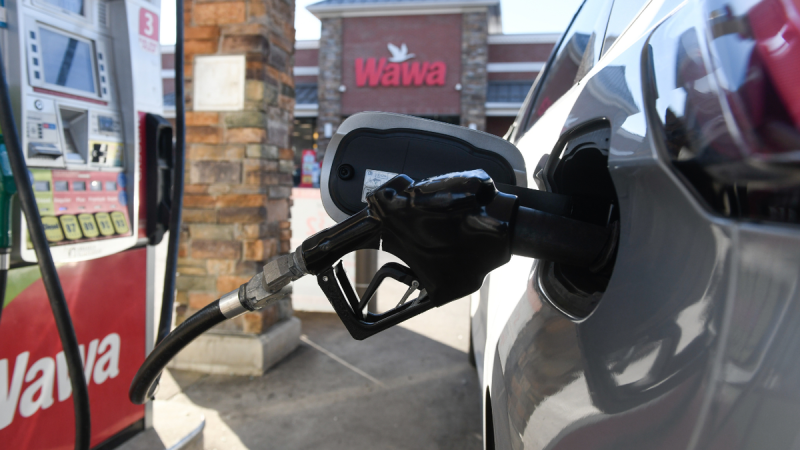
Americans could soon see higher gas prices as escalating tensions in the Middle East threaten a critical global oil chokepoint, raising fears of supply disruptions that could quickly reverberate across U.S. energy markets.
After joint U.S.–Israeli strikes, dubbed Operation Epic Fury, targeted Iranian sites over the weekend and killed Iran’s Supreme Leader Ayatollah Ali Khamenei, concerns quickly shifted to how Tehran might respond and whether oil infrastructure or tanker traffic could become collateral damage.
Any disruption to global crude supplies could translate into higher costs for American drivers at the pump.
‘Every time we’ve had flare-ups in the Middle East like we’re seeing right now — and we’ve seen this kind of situation periodically over the last 50 years — it has caused significant disruption to energy markets,’ economist Stephen Moore told Fox News Digital.
‘I would expect we could see anywhere from 25 to 50 cents a gallon increase in gas prices in the short term,’ he said.
Market data already shows prices moving higher.
Patrick De Haan, head of petroleum analysis at GasBuddy, said oil prices were up $5 per barrel, while wholesale gasoline prices had risen 11 cents per gallon.
He expects retail gas prices to begin climbing immediately, especially in areas where stations tend to adjust prices in sharp, periodic jumps.
The national average could hit $3 per gallon as soon as Monday, De Haan said, with some stations increasing prices by 10 to 30 cents this week and potentially more in markets that see larger price swings.
Moore warned that prices could climb further and remain elevated if vital transit routes or oil facilities are disrupted.
‘Huge amounts of global oil travel through the Strait of Hormuz, so this could be incredibly disruptive, delaying delivery of oil and gas,’ he said.
‘The Iranians have already knocked out some oil facilities in the Middle East, and who knows what they’re up to next. When you have less supply, prices go up. The big question is whether this will be a temporary bump or something more prolonged.’
The ongoing conflict sits near the Strait of Hormuz, one of the world’s most strategically important energy corridors.
‘This shipping route represents around 25% of global oil trade and 23% of liquefied natural gas trade,’ explained Jaime Brito, executive director of refining and oil products at OPIS.
The Strait of Hormuz, a narrow shipping lane between Iran and Oman that has long been a flashpoint during regional crises, serves as a vital artery for global energy markets.
Roughly 20 million barrels of crude oil and petroleum products — about one-fifth of global oil supply — transit the strait each day, underscoring how disruption there can quickly send shockwaves through international energy markets.
Highlighting the growing concern, Maersk, widely regarded as a bellwether for global ocean freight, said it will suspend all vessel crossings through the Strait of Hormuz until further notice and cautioned that services to Arabian Gulf ports may be delayed.
Still, not all price movements are immediate.
‘Developments over the weekend in the Middle East should hypothetically take time to ripple into the global supply chain. An initial assessment would suggest no specific price impacts should be seen in the gasoline market across the world, including the U.S.,’ Brito told Fox News Digital.
However, Brito said prices could climb quickly if markets expect trouble ahead, even before supplies are actually affected.
As a result, Brito said, developments in Iran may have already translated into higher gasoline, diesel and other fuel prices in parts of the U.S., depending on regional supply dynamics and individual company pricing strategies.
From a domestic standpoint, Brito added that gasoline prices follow a seasonal pattern, typically climbing during the summer travel months.
‘March prices are not expected to be significantly high,’ he said, noting that spring break travel could support demand in certain areas — but not at the level seen during peak summer driving season.
Ultimately, the direction of gasoline prices will depend less on seasonal demand and more on how the geopolitical situation unfolds in the days ahead.
Related Article