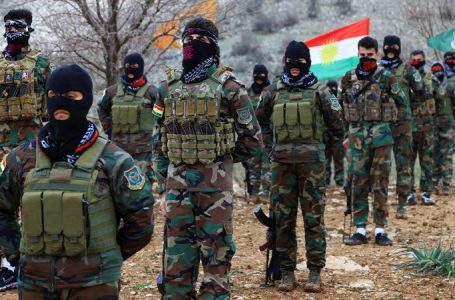
Iranian Kurdish fighters say they’re ready to strike Tehran, waiting for opening

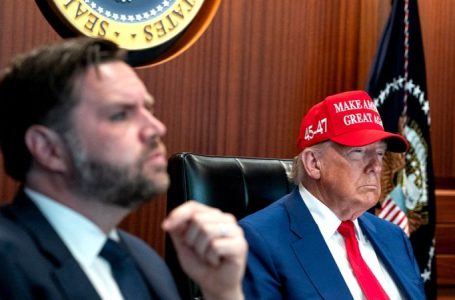
Hegseth once warned against endless wars. Now he’s leading Trump’s strike-first doctrine
In a little over a year, the United States has carried out dozens of airstrikes on vessels in the Caribbean tied to alleged narco-trafficking networks, launched sustained operations against Houthi forces in the Red Sea, captured Venezuelan President Nicolás Maduro, struck Iranian nuclear facilities and now embarked on an extended military campaign aimed at degrading Tehran’s missile, drone and command infrastructure.
The tempo marks one of the most assertive stretches of American force projection in recent years, spanning Latin America, the Middle East and critical maritime corridors.
For War Secretary Pete Hegseth, it also represents a striking turn.
Just before the 2024 presidential election, he described himself as a ‘recovering neocon,’ expressing regret over his support for Iraq-era interventionism and warning against open-ended wars.
Several analysts say the defining feature of the administration’s approach may be less about ideological evolution and more about alignment and execution.
‘Unlike in Trump one, everyone in Trump’s cabinet now — Hegseth, Rubio, etc. — understands that the president is the boss,’ said Matthew Kroenig, a defense strategist at the Atlantic Council. ‘In Trump 1.0 you had some Cabinet officials who thought their job was to save the Republic from Trump, the so-called adults in the room. And so I think it’s pretty clear the president wanted to go in this direction, and I think Hegseth sees himself as supporting the president’s vision.’
‘Validation of … leadership’
That cohesion has coincided with a pattern of risk-taking.
Several of the administration’s most consequential military moves, from Venezuela to the Houthis to the current Iran campaign, carried the potential for escalation.
Some strategists say the relative absence of early blowback from those interventions may have reinforced the administration’s willingness to escalate into the Iranian theater.
‘I’m not sure I would have advised this,’ Kroenig said of the Iran operation. ‘It is pretty risky, but it’s going well so far.’
Iranian missile launches have declined in volume. Regional allies have not broken ranks.
Whether that constitutes strategic success, however, depends on the metric.
Justin Fulcher, a former Pentagon adviser to Hegseth, argued the early phases of the campaign reflect what he described as a ‘return to strategic clarity.’
‘Deterrence is only credible when our allies actually believe that if President Trump says something, we will back it up,’ Fulcher said. ‘This is a validation of Secretary Hegseth and President Trump’s leadership.’
Hegseth, a former Army officer who served in both Iraq and Afghanistan, has argued that the current campaign bears little resemblance to those conflicts.
‘This is not Iraq. This is not endless. I was there for both,’ Hegseth said at a press conference in early March. ‘Our generation knows better and so does this president.’
In a separate interview, he added, ‘This is not a remaking of Iranian society from an American perspective. We tried that. The American people have rejected that.’
Danielle Pletka, a senior fellow at the right-leaning American Enterprise Institute think tank, said the campaign has unfolded largely as expected.
‘I think things have gone reasonably well,’ Pletka said, pointing to degraded air defenses and what she described as repeated miscalculations by Iran. ‘All they’ve really done is made everybody quite mad, and that was a really bad calculation on their part.’
At the same time, she cautioned against interpreting the administration’s actions as part of a fixed doctrine.
‘I don’t think that it is doctrinal,’ Pletka said. ‘I think this is ad hoc.’
Some longtime Trump supporters have said the current conflict is not what they expected from Trump, who campaigned on ending wars and ‘America First.’
‘It feels like the worst betrayal this time because it comes from the very man and the admin who we all believed was different and said no more,’ Rep. Marjorie Taylor Greene, R-Ga., wrote on X. ‘Instead, we get a war with Iran on behalf of Israel that will succeed in regime in Iran. Another foreign war for foreign people for foreign regime change. For what?’
In Pletka’s view, the president has shown a pattern of attempting diplomacy first and shifting to force only when he concludes negotiations are unserious. She argues that posture distinguishes the current moment from past interventions.
She also emphasized that much of the operational credit belongs to the professional military.
‘The planning behind this is credit to the U.S. military and to the CENTCOM commander and to the Chairman of the Joint Chiefs,’ she said.
‘Success and precision’
That distinction complicates efforts to attribute the current posture solely to Hegseth’s personal worldview. While the defense secretary has become a public face of the administration’s deterrence messaging, the execution of high-tempo campaigns rests heavily with career military leadership.
Some critics argue the administration has yet to clearly articulate an end state for the Iran campaign.
‘Pete Hegseth needs to check with his boss on what the objective is,’ former national security advisor John Bolton recently said on CNN. ‘How does Hegseth explain that we’ve already changed the regime, which wasn’t our objective? I think the Pentagon top leadership, civilian top leadership, needs some attitude adjustment. I think the military’s doing fine, but I wonder about the civilian leadership.’
The White House pushed back forcefully on criticism of the campaign.
Anna Kelly, a White House spokesperson, said Monday that Hegseth ‘is doing an incredible job leading the Department of War,’ pointing to what she described as the ‘ongoing success of Operation Epic Fury’ and other missions.
Kelly said Iranian retaliatory attacks ‘have declined by 90 percent because the Department of War is destroying Iran’s ballistic missile capabilities,’ and added that Hegseth works ‘in lockstep with President Trump every day’ to ensure the U.S. military ‘continues to be the greatest, most powerful fighting force in the world.’
The Pentagon echoed that assessment.
‘Operation Epic Fury continues to advance with overwhelming success and precision,’ Chief Pentagon Spokesman Sean Parnell said, describing a ‘resolute, full-spectrum campaign’ aimed at the ‘total dismantlement of Iran’s terrorist network or its unconditional surrender.’
Others see the moment in broader historical terms.
Peter Doran, a foreign policy analyst, described the campaign as a potential attempt to ‘end a 47-year war’ waged by the Islamic Republic against the United States, but on Washington’s terms.
‘This is a clear effort to end a 47-year war that Iran has been waging against the United States,’ Doran said.
He argued that visible American military performance could reverberate beyond the Middle East, particularly in Beijing.
‘They look good,’ Doran said of U.S. forces. ‘That will serve, I hope, as a disincentive for adventurism.’
If the operation ultimately succeeds in significantly degrading Iran’s military infrastructure, Doran argued, it could reshape the Middle East and expand diplomatic opportunities such as broader Arab-Israeli normalization.
‘It changes everything in the Middle East,’ he said.
Yet even supporters acknowledge that long-term effects remain uncertain. In Venezuela, Maduro’s removal marked a dramatic shift in U.S. policy, but the governing apparatus he built remains largely intact.
Degrading missile stockpiles and drone infrastructure in Iran may buy time, but whether it produces durable deterrence or simply postpones reconstitution remains to be seen.
For now, the administration’s willingness to take calculated risks and its ability to avoid immediate escalation have reinforced the perception of restored American assertiveness. Whether that assertiveness translates into lasting strategic gains will likely define Hegseth’s tenure far more than the rhetoric that preceded it.
Hegseth and the Pentagon did not respond to requests for comment.
This post appeared first on FOX NEWS